



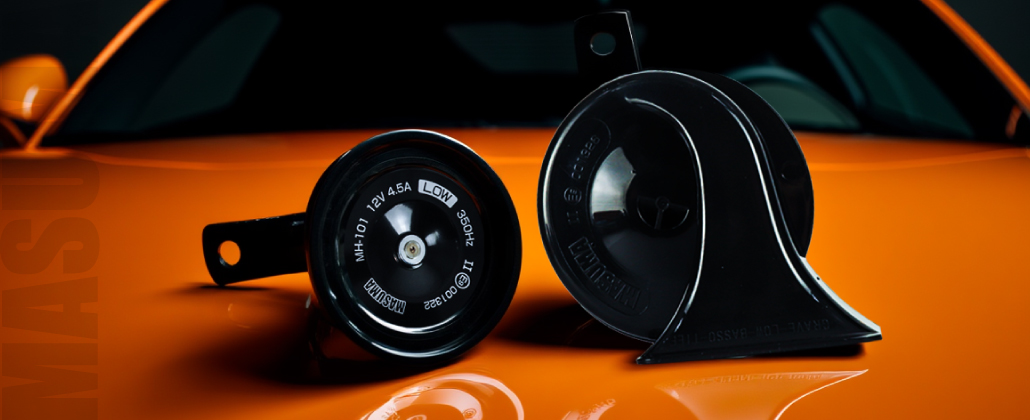
Masuma expands its auto electrical product line with a new category — vehicle horns.
A horn is not just a way to express emotions on the road; it is a critical element of active safety. Traffic regulations and technical standards in many countries require vehicles to be equipped with a fully functional audible warning device. A missing or faulty horn is grounds for prohibiting vehicle operation.
Masuma offers several 12V dual-tone horns designed as direct replacements for OE units. Below are their key features.
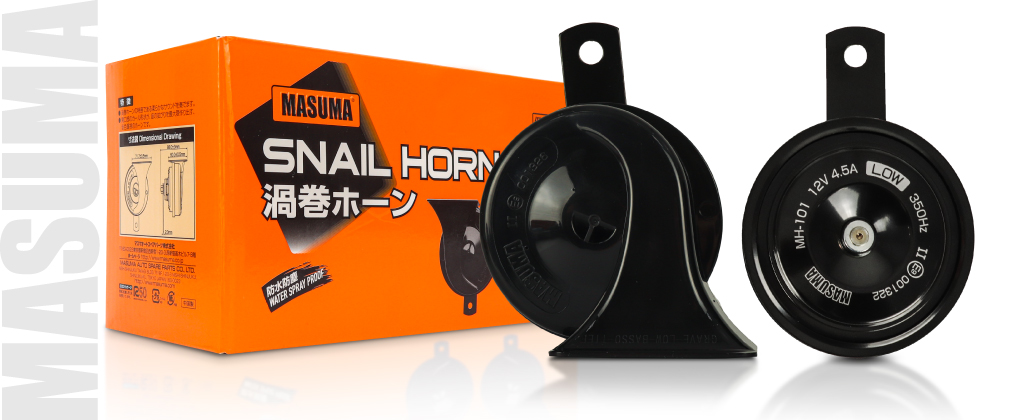
DESIGN TYPES: DISC AND SNAIL HORNS
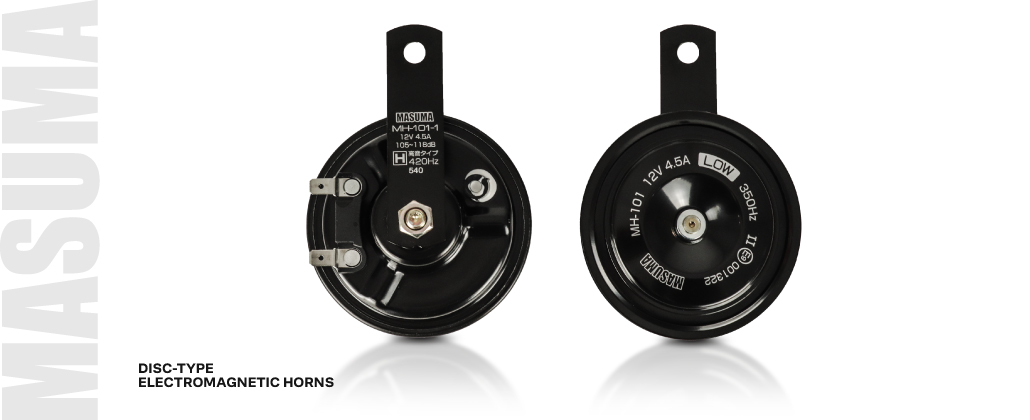
- Disc-type electromagnetic horns are lightweight, compact, and produce a classic metallic tone. They are well suited as OE replacements. In these horns, the electromagnetic core attracts a metal diaphragm, causing it to vibrate and generate sound with a characteristic sharp timbre.
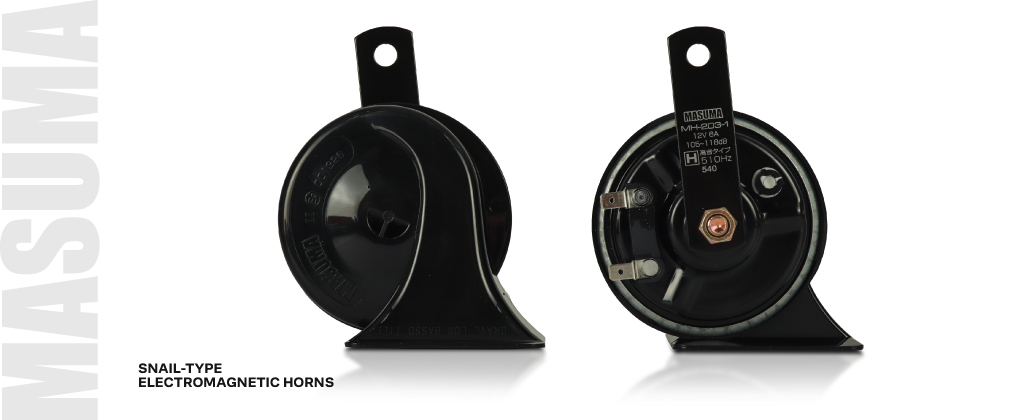
- Snail-type electromagnetic horns are larger and heavier but deliver a deeper, more powerful sound that cuts through urban noise more effectively. In these models, sound from the vibrating diaphragm is channeled through a curved acoustic horn, which amplifies it, adds directionality, and enhances tonal richness.
SOUND PRESSURE LEVEL: UP TO 118 dB
A sound level of 108 (110) to 118 decibels significantly exceeds that of many factory-installed horns. For comparison, most standard horns on economy and compact-class vehicles typically produce 95–105 dB.
FREQUENCY: 510/410 HZ AND 420/350 HZ
- High tone 510 ±30 Hz and low tone 410 ±30 Hz — a classic dual-tone combination reminiscent of old-fashioned cars horn sound. This frequency range is used in Masuma snail-type horns.
- High tone 420 ±20 Hz and low tone 350 ±20 Hz — a more balanced and “velvety” sound, commonly associated with mid-range and premium-class foreign vehicles. This frequency range is used in Masuma disc-type horns.
ECE R28 COMPLIANCE
All Masuma horns comply with the international ECE R28 standard, which sets strict requirements for audible warning devices. The regulation specifies stable tone and a defined frequency spectrum, reliable long-term cyclic operation without performance loss, instant activation with no delay, and consistent performance under wide temperature variations. In addition, ECE R28 requires resistance to high humidity levels of up to 95%, ensuring dependable operation in demanding environmental conditions.